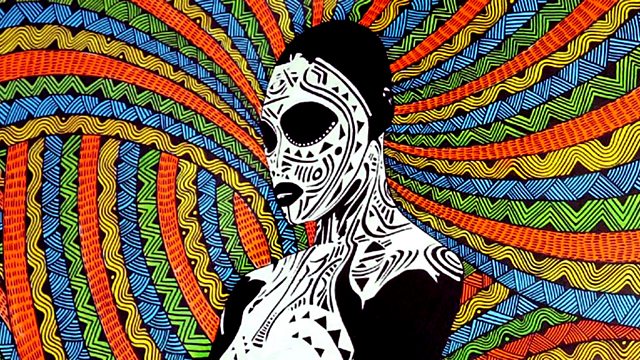
Discover how West African Orisha traditions, evolved into African American Hoodoo. Explore the history, symbolism, and cultural resilience that connect Yoruba spirituality to modern rootwork.
At SoulRoot Botanica, we believe that understanding where we come from helps us understand how we live, believe, and create today. Many of our modern spiritual and cultural practices trace back to ancestral traditions that carried strength and wisdom across generations.
This post begins a deeper look into those roots — exploring the Orishas, Hoodoo, and the ways African spirituality adapted and survived through African American experience. It’s the first in a series of reflections on ancestry and heritage, because these stories matter. Knowing our origins reminds us that adaptation is also a form of resistance, and that the spirit of our ancestors continues to shape who we are.
The forced migration of Africans through the transatlantic slave trade between the 16th and 19th centuries brought profound cultural and spiritual traditions to the Americas. Among these were the Orisha systems of the Yoruba people of present‑day Nigeria and Benin. Over generations, these beliefs interacted with Christianity, European folk practices, and Indigenous knowledge to shape what became Hoodoo, a distinct African American spiritual tradition.
The Orishas: Spiritual Forces in the Yoruba Worldview
In Yoruba cosmology, the Orishas serve as intermediaries between humanity and the supreme being, Olodumare. Each Orisha governs certain moral, natural, or social domains:
- Obatala – associated with creation, wisdom, and purity.
- Ogun – the Orisha of iron, technology, and work.
- Oshun – linked to love, fertility, and river waters.
- Shango (Sango) – representing thunder, power, and justice.
- Yemaya (Yemoja) – mother of the seas and protector of women.
- Ochosi (Oxóssi) – patron of hunters, precision, and truth.
Yoruba religion emphasizes balance and the presence of àṣẹ (divine energy or authority), which animates the universe and empowers ritual and speech. Divination systems such as Ifá, performed by trained priests (babalawo), guide believers in maintaining harmony with these spiritual forces.
academic.oup.com · press.uchicago.edu
Diaspora Adaptations: Religion and Resistance
When Yoruba and other West African peoples were enslaved and dispersed across the Atlantic, their religious frameworks survived through oral memory and adaptation. In regions such as Cuba (Santería), Brazil (Candomblé), and Haiti (Vodou), African deities merged with Catholic saints, creating syncretic religions that preserved much of the original theology.
In the United States, where African religious practice was more tightly restricted, open Orisha worship largely disappeared. Nevertheless, certain principles and symbols persisted — in the use of charms, prayer formulas, the crossroads, and appeals to both spiritual and ancestral forces. These laid the foundation for Hoodoo, also known as rootwork or conjure.
yalebooks.yale.edu · global.oup.com
Hoodoo: The African American Folk System
Hoodoo is not a formal religion but a folk spiritual system emphasizing practical results — protection, health, luck, and justice. Its practitioners, known as conjure doctors, combined African ritual logic with Christian scripture, European herb lore, and Native American plant medicine.
Although Hoodoo typically does not name or invoke the Orishas directly, it reflects their influence conceptually.
- Ochosi’s focus on justice appears in protection work and court‑case spells.
- Ogun’s association with iron surfaces in the practice of carrying nails, horseshoes, or railroad spikes for defense.
- Oshun’s sweetness echoes in the use of honey jars for attraction or reconciliation.
Through such parallels, African metaphysics were translated into a new environment while retaining their underlying value system of moral order and reciprocal power.
uncpress.org · press.uchicago.edu
Cultural Continuity and Modern Practice
Today, both Orisha reverence and Hoodoo are undergoing cultural revitalization. African Americans are reclaiming ancestral knowledge, studying Yoruba religion, and contextualizing Hoodoo as an authentic African‑derived system rather than superstition. Practitioners engage in ancestral veneration, herbal healing, and energy work while situating these practices within contemporary frameworks of identity and heritage.
This continuity demonstrates how African spirituality adapted to changing circumstances without losing its essential structure — a testimony to resilience and innovation across centuries.
journals.sagepub.com · nyupress.org
Key Takeaway
The relationship between the Orishas and Hoodoo illustrates a continuous thread of African philosophy running through the African American experience. Where formal worship was forbidden, symbolic and functional elements endured. Hoodoo thus stands as both a spiritual toolkit and a cultural archive — one that preserved the essence of Africa’s sacred science under conditions of profound displacement.
Closing Thoughts
Spirituality is more than just crystals, affirmations, and shadow work — it’s the ongoing journey of reclaiming your own personal power. By looking back to our roots, we see that true spiritual practice has always been about resilience, connection, and self‑knowledge. This post is meant to reflect that truth: that the wisdom of our ancestors is not something distant or abstract, but a living force that continues to guide us as we define what spirituality means for ourselves today.
Suggested Further Reading
- Jacob K. Olupona, City of 201 Gods: Ilé-Ifè in Time, Space, and the Imagination (University of California Press, 2011)
- Yvonne Chireau, Black Magic: Religion and the African American Conjuring Tradition (University of California Press, 2003)
- Robert Farris Thompson, Flash of the Spirit (Yale University Press, 1984)
Want more posts in the category? Click the link below!
 SoulRoot Botanica
Leave a comment